
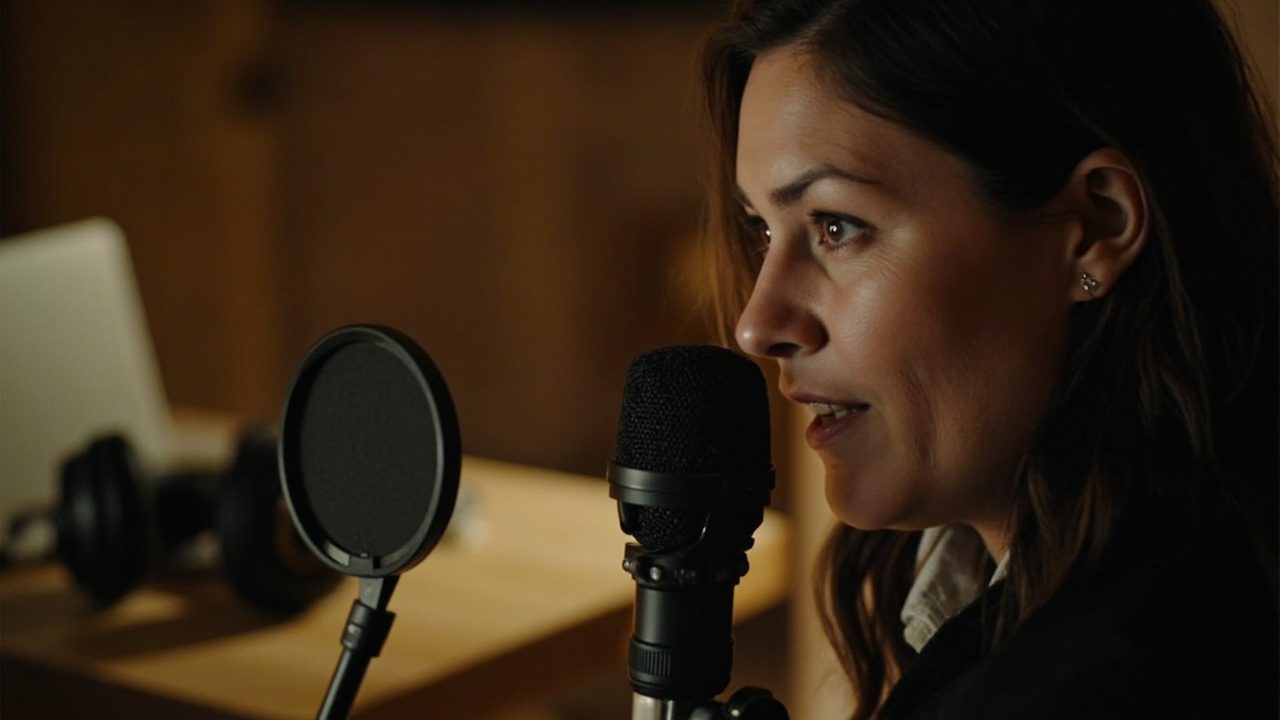
You’re looking for a clear review of the Shure PG48 and, above all, its performance and sound quality in real life. This entry‑level model promises a clean voice for the stage, events, or karaoke. I took the time to use it during rehearsals, in a small room, and for speaking engagements. Here’s what to expect, without marketing fluff or unnecessary jargon.
Shure PG48 Microphone: why this model remains a solid choice
The PG48 was designed for casual spoken and sung voice. Its dynamic microphone capsule emphasizes robustness and ease of use, which makes it interesting for venues, bars, associations, or individuals who want a reliable tool without stepping into the high end.
You plug it in, set the level, it works. It doesn’t seek the subtlety of a studio mic, but relies on intelligible diction, controlled background noise, and adequate performance in the face of stage feedback.
The technical elements that really matter when listening
On paper, the PG48 offers a cardioid pickup pattern capable of limiting ambient noise, an asset for lively stages and reverberant rooms. Its frequency response 70 Hz–15 kHz targets the midrange useful for the voice, with a slight boost in the upper midrange that helps projection.
The sensitivity -53.5 dBV/Pa and the impedance 600 ohms make it an easy companion to be powered by most mixers and stage boxes. The integrated on/off switch is convenient for events and speeches.
In the sound: character, color and limits
For pop‑rock singing or spoken voice, the PG48 provides a slight vocal presence, useful to stand out in a tight mix. The bass remains contained to avoid “fog,” and the sibilants are generally controlled as long as the take is well managed.
It shows its limits if you want a very detailed result, or ultra‑precise transients. For a demanding studio recording, it’s better to consider a condenser mic. For live use, karaoke, conferences or rehearsals, it gets the job done with seriousness.
On stage and in events: real‑world behavior
In a noisy environment, the cardioid capsule offers good rear rejection. When placed correctly relative to the monitors, you get a suitable gain before feedback. Handling noise remains controlled if you hold the handle without “cupping” the grille.
Presenters appreciate the switch to cut the capsule between two interventions. For singing, keeping a distance of 2 to 5 cm stabilizes the level and limits plosives, especially without a dedicated anti‑pop filter.
Useful settings to get the best from the PG48
Placement and mic technique
- Keep the capsule axis toward the mouth, slightly angled to soften the “S” sounds.
- Use the proximity effect sparingly to add body without overloading the low end.
- Avoid covering the grille with your hand, or you’ll risk increasing feedback.
Filtering and equalization
- A light low‑cut can clean up stage rumble and footfalls.
- If needed, a gentle cut around 6–8 kHz quiets sibilants on some voices.
- A small boost in the midrange can help a slightly dull voice to cut through the mix.
Quick comparison with known alternatives
To place the PG48 in context, here is a cross‑reading against a few stage references. Prices vary over time and across packs, think “ballpark figure” rather than a fixed amount.
| Model | Type | Sound character | Pros | Cons |
|---|---|---|---|---|
| Shure PG48 | Dynamic, cardioid | Readable midrange, contained bass | Simple, solid, switch | Less detailed in studio |
| SM58 | Dynamic, cardioid | Classic, rounded and forgiving | Proven standard for live use, very rugged | Higher price |
| PG58 | Dynamic, cardioid | Slightly softer on the high end | Budget-friendly vocal option | Less iconic than SM58 |
| Behringer XM8500 | Dynamic, cardioid | Prominent midrange | Aggressive price, pleasant surprise | Units vary by batch |
In absolute terms, the PG48 ticks the essential boxes for the budget stage. The value-for-money remains the main argument, with a rendering fully usable in live sets and events.
Ergonomics, accessories and integration into your signal chain
The metal handle feels comfortable in the hand and the grille withstands field wear. The mic is often supplied with a clip and an XLR cable, a plus to get started right away. The moderate weight helps reduce fatigue during long presentations.
In terms of integration, it pairs well with entry‑level preamps. On a small analog mixer or a classic audio interface, you get a clean signal with reasonable gain, without notable unwanted noise.
Concrete use cases: when the PG48 shines
Karaoke, bars, public venues
For evenings that move from speeches to varied songs, its handling tolerance and mid‑range clarity make the difference. Presenters appreciate how easy it is to set up.
Conferences and training
In a room, the timbre nicely highlights articulation. Placed close to the mouth, intelligibility is preserved even with a modest diffusion system.
Rehearsals and quick demos
To capture an idea, a vocal guide, or a podcast without audiophile ambitions, the PG48 provides a clean and constant result, ideal for documenting work or sharing a draft.
Essential recalls on the type and directivity
If you’re unsure between a dynamic and a condenser, this guide summarizes the key differences, from output level to sensitivity to plosives: dynamic microphone or condenser: the right choice for recording.
To better understand how to orient the mic and manage the risk of feedback, this dossier on the microphone directivity is particularly useful to stage managers and beginner singers.
Strengths and cautions
- Solid, easy to use, intelligible vocal rendering.
- Consistent behavior in reverberant rooms.
- Accessories often included to start without friction.
- Less detail than a condenser in critical recording.
- Requires good hand technique to avoid handling noise.
Shopping tips and budget to plan
The PG48 is generally in an affordable range, depending on whether you opt for a package with accessories or not. At this price level, don’t overlook the little extras that make life easier: windshields, a stable stand, and reliable cabling.
If you’re considering a upgrade for intensive touring or more demanding studios, moving to a higher series or a more iconic model may make sense, but for versatile and immediate use, the PG48 remains coherent.
My take after several sessions
During rehearsals, I appreciated how it places the voice center stage without requiring a lot of equalization. Feedback is easy to manage if the monitors are not aimed along the capsule’s main axis.
In live use, the switch prevented unwanted noises during transitions. In quick recording, a light high‑pass filter was enough to clean up stage vibrations. We know where we’re going, and that’s what you expect from a reliable work tool.
Verdict: who to advise the PG48 to today
The Shure PG48 is suitable for those who want a solid, straightforward mic ready for the stage, speeches, and singing‑oriented evenings. It does not replace a studio condenser, but delivers a clear voice that’s easy to use, with a comfortable safety margin in live settings.
For a first setup, a pool of mics for the audience, or a plug‑and‑play solution, it remains a smart option. You have the basics to decide whether its strengths match your immediate needs and your technical context.