
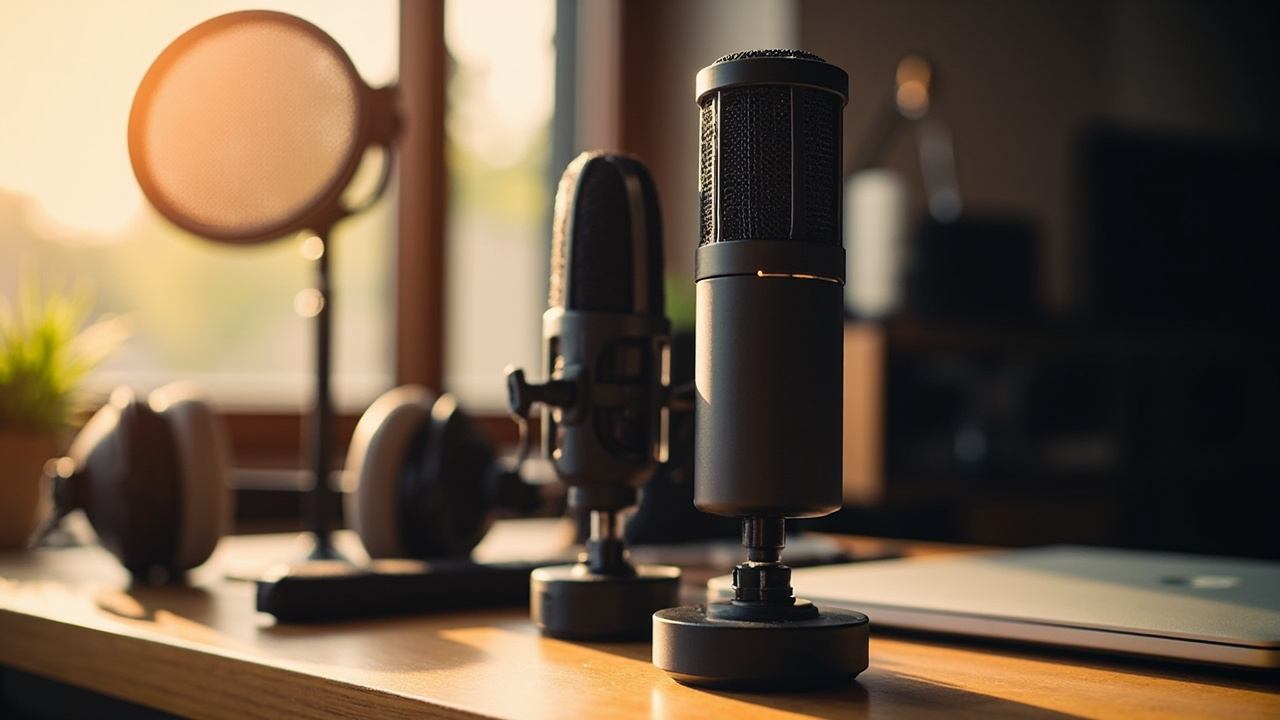
Between two reference points that have shaped home-studio audio creation, the Rode NT-USB vs Blue Yeti duel keeps resurfacing among streamers, podcasters and voice-over artists. Are you after clean sound, frictionless setup, and a professional result without getting lost in the technique? I’ve recorded with both models on real projects, from Twitch live streams to documentary narration. Here is a candid, usage- and result-focused comparison to help you decide without regret.
Rode NT-USB vs Blue Yeti : what you need to know before buying
Rode bets on simplicity and consistency. A single pickup pattern, a clean sound, and included accessories designed to work without surprises. The Yeti, meanwhile, is the creator’s Swiss Army knife with four capture modes and full front-panel controls. Two philosophies: focus on voice with Rode, stage flexibility for the Yeti.
If you’re a beginner or often host multi-person discussions around the mic, the Yeti reassures with its versatility. For a voice-over, singing in a home studio, or a stream where vocal presence matters, the Rode offers a solid base that is very controllable in mixing.
Signature sonore et rendu des voix
On my baritone voice, the Rode NT-USB shows a stable low-mid and clear consonant articulation. Less aggressive sibilance, less listening fatigue, and a controlled bass that makes proximity management easier. The Yeti delivers a stronger upper mid, useful for cutting through in a game/voice mix, but it sometimes requires a light EQ to smooth out the sibilants.
With gentle processing (EQ + light compression), the Rode takes on an elegant broadcast color. The Yeti, well-tuned, provides immediate presence, ideal for live use. In both cases, the secret lies in the angle of incidence and the mic-to-mouth distance: 12–15 cm with a pop filter, capsule pointed toward the mouth, and input level below -10 dBFS to avoid saturation.
A technical point often overlooked: the frequency response and breath control. Both mics cover the human voice well, but the Rode feels a touch more muted in the high end. If you like a silky timbre, it scores a point.
Features, connectivity and real-world ergonomics
Rode ships its NT-USB with a minimalist desk arm, a tailor-made pop filter, and a headphone jack for direct monitoring. Fewer parts to buy, more time to record. The headphone mix control (micro/PC return) is very handy for talking over background music.
The Blue Yeti stands out with its front-panel controls: mute, headphone volume and the gain knob. At the back, the pickup pattern selector. The handling is intuitive, especially if you frequently switch from a solo face-to-camera setup to a two-person interview around the same mic.
Both are USB plug-and-play microphones, recognized without drivers on macOS and Windows. 3.5 mm headset jack, near-zero latency, OBS/DAW compatibility immediate. The Yeti is heavier on its base, the Rode more elegant in a studio setup.
Directivities and concrete use cases
The NT-USB operates in fixed cardioid. This is a sensible choice for isolating the voice and reducing the room behind the mic. The Yeti offers four patterns: cardioid, omnidirectional, bidirectional (face to face), and stereo. This palette opens the door to tabletop podcasts, room ambience, or improvised duos without moving the setup.
Need a detailed refresher on capture patterns and their impact? Check out our guide "everything you need to know about directivities," useful for anticipating room management and mic placement.
Practical note: cardioid + a 20–30° angle relative to the axis is the quick method to reduce plosives and sibilants without too much software processing.
Test terrain : streaming, podcast, singing
Streaming and video games
On OBS, I kept a track level around -18 dBFS peak. The Rode requires less correction to tame the highs with bright headphones. The Yeti, in cardioid, is punchy and readable in the mix, often needing a light de-esser. Two effective presets: compressor at a 3:1 ratio and a gentle gate to clean up the background noise from the keyboard.
Solo podcast and interviews
Solo: Rode for its warm vocal texture, easy to tune episode after episode. Two-person interview: the Yeti in bidirectional on a treated desk (rug + curtains) saves time. For a roundtable, omnidirectional if everyone stays close to the mic and speaks loudly, otherwise prefer two separate mics.
Singing and voice-over
For vocal takes in a room, I preferred the Rode. The upper end stays polished, and proximity effect management is simple with a pop filter. The Yeti can also manage with a gentle EQ around 6–8 kHz. In advertising voice-overs, NT-USB, without hesitation, for its more “studio” sound.
Technical specifications compared
| Criterion | Rode NT-USB | Blue Yeti |
|---|---|---|
| Type | Condenser, USB | Condenser, USB |
| Directivity | Cardioid | Cardioid, omnidirectional, bidirectional, stereo |
| Frequency response | 20 Hz – 20 kHz | 20 Hz – 20 kHz |
| Sampling rate / depth | Up to 48 kHz / 16-bit | Up to 48 kHz / 16-bit |
| Controls | Mix monitoring, headphone volume | Gain, mute, headphone volume, pattern selector |
| Headphone jack | 3.5 mm, direct monitoring | 3.5 mm, direct monitoring |
| Accessories | Desk arm, pop filter, mounting ring | Heavy desk base |
| Compatibility | macOS, Windows, iOS/Android (with adapter) | macOS, Windows |
| Weight and footprint | Light, compact studio form | Heavier on base |
If you’re after a sharper look at the Rode NT-USB, check out our Rode NT-USB test with audio samples.
Noise, processing and workflow
Both microphones will pick up your room. Rugs, curtains, and a small anti-noise screen behind the mic work wonders. The Rode, thanks to its capsule and single directivity, tolerates untreated rooms better when placement is careful. The Yeti, in omnidirectional or stereo, requires a discipline of space.
Quick workflow I use: high-pass at 80–100 Hz, gentle correction of muddy lows, moderate de-essing, compressor in parallel to densify. If the room is lively, a touch of noise reduction in post (not excessive) and a very light gate. Keep a headroom of -12 dBFS during recording; your mixes will thank you for clean takes.
Experience and daily comfort
The sturdy Yeti chassis inspires confidence, but its tall base easily picks up desk bumps. An articulating arm and an elastic suspension clearly improve both models. The Rode comes ready to use, and its compact footprint quickly disappears in front of the camera.
As for drivers, it’s smooth sailing: everything installs in a few seconds. In video calls, the Rode’s vocal clarity makes speech more poised, while the Yeti gives a more “radio” presence in cardioid mode with a gentle mid boost.
Value for money and longevity
These mics deliver solid value for any creator. The Yeti remains the ultimate versatile option, often attractively priced in bundles. The Rode, a bit more vocal-studio oriented, pays off quickly if voice is your main product. Durability is there: solid build, standard connectivity, a large user community, and easy resale.
Invest smartly: a comfortable closed-back headset, a reliable articulating arm, and a minimally treated environment will make more of a difference than chasing plugins. The mic then becomes the coherent brick of a stable chain.
Concrete micro-case scenarios to decide quickly
- You stream games with a sustained background soundtrack: Yeti in cardioid, moderate gain knob, gentle gate.
- Voice-over, e-learning, narration: Rode for a clean and steady timbre, minimal EQ.
- Two-person podcast on a small table: Yeti in bidirectional, reflection control with rug/curtains.
- Singing in a home studio: Rode, stable distance, pop filter, discreet compressor.
- Ambient reportage: Yeti in stereo or omnidirectional if the room is quiet.
The verdict: which mic for which profile?
For a creator focused on the voice, who wants an elegant and steady sonic base without spending hours editing, the Rode NT-USB is a reliable companion. For a versatile communicator, a round-table host, or a streamer who frequently changes setups, the Blue Yeti stays ahead with its capture modes and integrated controls.
In an ideal world, you’d keep both: Rode for controlled recordings, Yeti for lively formats. In real life, base your choice on your room, your main use, and your mix preference. Your voice will thank you.
Still unsure? Listen to comparative takes, test placements, and note your preferences. And if you want to dive into the subtleties of capture patterns, keep our guide on mic directivities in your favorites to better frame your future takes.