
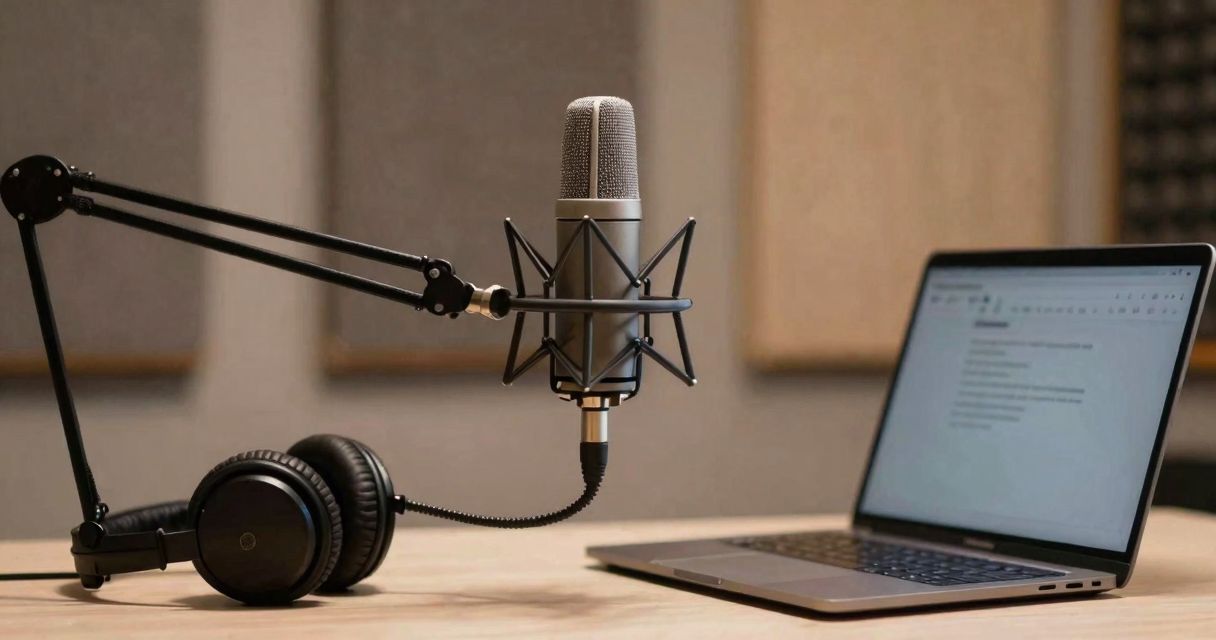
A spy microphone intrigues as much as it fascinates. Behind the expression, we are mainly talking about very compact audio recorders, designed to capture a conversation or an ambience without drawing attention. Our lens here is clear: to illuminate the purchase, compare the categories and remind of the legal uses, because respecting privacy is not optional. You will find below an overview of the solutions available in 2026, their strengths, their limits, and use cases compliant with the law, tested in the field.
2026 Panorama of discreet audio devices
Beyond the cliché, these devices cover several families: wireless miniature dictaphones, network-connected modules, accessories integrated into a daily object, or remote-controlled systems. All promise discretion, but not with the same approach: some prioritize autonomy, others the restitution of the spectrum, others again connectivity for remote listening. The right question is not “which is the smallest?”, but “which solution meets my needs, while complying with the legal framework?”
Laws to know before any purchase
In France, recording someone without their knowledge may fall under the Penal Code (art. 226-1). Recording an identified person, in a private place, without prior information, is generally prohibited. The European Regulation on data protection (GDPR) also governs the collection, storage and purpose of voice recordings.
- Inform people and obtain written consent when required.
- Limit the capture to the declared use; avoid any “just in case” collection.
- Store files in a defined perimeter, with short retention periods.
- Avoid any capture in spaces where the expectation of privacy is high (closed offices, homes).
- In a corporate setting, rely on a clear legal basis and an information notice.
This framework protects everyone and also protects you. The quality of an approach starts with transparency and simple documentation of your processes.
The product families, from the simplest to the most connected
Compact voice recorder (discreet dictaphone)
The most affordable and often the most reliable. We record locally, then retrieve the file via USB. The strengths: neutral sound and understated design. Ideal for taking notes during a meeting with consent, or capturing authorized room ambiences. In the field, I prefer a low-noise capsule and a case with a matte finish, less reflective.
Module connected to cellular network
Some systems offer remote listening via SIM card. Their value lies in real-time alerts and monitoring without moving. To be used with legal and operational caution, because a network implies traces, data plans, and strict usage conditions. Reserve for clearly defined and documented cases, with procedures for informing the people involved.
Wi‑Fi/IP micro for local supervision
We find modules connected to the home or professional network. Local streaming, access via application: convenient for a controlled environment. The audio is often compressed, which is sufficient for intelligibility. Network security becomes a central concern: strong passwords, updates, segmentation.
Integrated objects (pen, badge, dummy outlet)
All-in-one solutions where the capsule is integrated into an object. Obvious advantage: visual integration. Drawback: the capsule sometimes suffers from resonances or rubbing. In professional use, I only keep this format if the justification is clear, written, and the sound quality has been validated in testing.
Tags and remote controls
Some references combine RF remote control, remote triggering and hidden indicator lights. Ease of use, yes, but capture must remain proportional and announced. For consented voice capture (for example, team debriefings), it’s often sufficient with a good signal-to-noise ratio.
| Type | Discretion | Audio quality | Autonomy | Key advantage | Typical authorized uses |
|---|---|---|---|---|---|
| miniature recorder | High | Good to very good | From 8 hours to several days | Reliability, simplicity | Note-taking, declared ambiences |
| GSM/4G | Medium to high | Adequate | Variable (network dependent) | Remote listening | Authorized and informed surveillance |
| Wi‑Fi/IP | High | Good (compressed) | From 6 hours to continuous on mains | Local supervision | Informed room monitoring |
| Integrated objects | Very high | Uneven (depending on design) | From 4 hours to 12 hours | Visual camouflage | Announced and framed captures |
| Beacon + remote | High | Good | From 10 hours to 24 hours | Controlled triggering | Briefs with prior consent |
The table acts as a compass; each project deserves a real test in the target environment.
Technical criteria for a relevant choice
Restitution and targeted capture
Prioritize sound quality over magical tech. The capsule, the clean noise and the handling of transients count more than marketing. The directivity of a microphone radically influences what you capture: cardioid to isolate a nearby source, omni for ambiences. Understanding the directivity helps limit stray noises and make dialogue intelligible.
Endurance and energy economy
Autonomy remains decisive. Good devices offer a VOX (voice-activated) detection mode to trigger on speech and save the battery; useful when the scene is intermittent. Check the actual capacity advertised by the manufacturer: according to our feedback, deviations of 10 to 20% are common depending on temperature and ambient sound level.
Memory, formats and security
Ample memory, a codec that is not destructive when possible, and optional encryption of files are assets. Date/time indexing facilitates archiving and purging. For sensitive data, secure storage and a deletion procedure are indispensable. Connection logs must remain accessible for internal audit.
Connectivity and risk exposure
Wi‑Fi/IP and GSM/4G modules open the door to remote listening, but also expose to network risks. It is better to segment, harden passwords, and limit access to only authorized people. A clear firmware update policy helps prevent overlooked vulnerabilities.
Three fully compliant and proven usage scenarios
Note-taking in a project meeting
Context: a small team, need for an accurate report. Procedure: prior information, email consent, local capture via dictaphone, deposit of files on an internal server with restricted rights. Result: decisions traced, writing time halved. Point of attention: announce the retention period and automatic deletion.
Room ambiences for a documentary
Context: audiovisual production, capturing ambiences before shooting. Procedure: authorization from the room management, information boards, defined time slots. On-set tip: a pair of ambient microphones for the space, a small discreet recorder as a close reinforcement near the informed audience. Point of attention: verify rights related to the music played.
Field debriefings on the move
Context: sales teams that record a client feedback on the spot. Procedure: service note, dictation app integrated into the company ecosystem, automatic export to a secure drive. Added value: collective memory and accelerated onboarding. Point of attention: avoid any personal data not essential.
Mise en œuvre responsable : ce que l’on valide avant de lancer
- Quick audio test in the real place: HVAC noises, reverberation, fabric rubs.
- Adjust the VOX threshold if available to reduce unnecessary recordings.
- Check the time-stamp, average level (-18 to -12 dBFS peak) and a local backup.
- Clear information note: who is recording, why, where the data is stored, for how long.
- Internal legal review: traceability of written consent and the legal basis.
Feedback: in hybrid meetings, a small mic close to the main speaker and a second ambient mic guarantee intelligibility significantly higher than a single distant capture point.
Express comparison: how to prioritize your priorities
For a controlled budget, a quality dictaphone will do better than a system packed with options that aren’t used. If remote listening is key, prefer a simple, documented, auditable architecture. If visual discretion is paramount, validate the frequency response of the integrated object and the handling noises. In all cases, place compliance at the center: without it, no sustainable project.
The editor's note
A credible project aligns the editorial or operational need, the technique and the law. Focus on the essentials: intelligibility, endurance, safety, and clear data governance. Connected modules are useful when the procedure is rigorous, dictaphones remain reliable, and integrated objects require a real audio test before validation.
Want to go further on stage and placement? A detour to the dedicated page on the directivity of a microphone changes the game in sound capture. For ambience, our selection of ambient microphones can usefully complement your setup.
Last reminder: inform, frame, document. A well-chosen and well-explained technology becomes an asset, not a risk. This is the whole challenge of a discreet tool used wisely.