
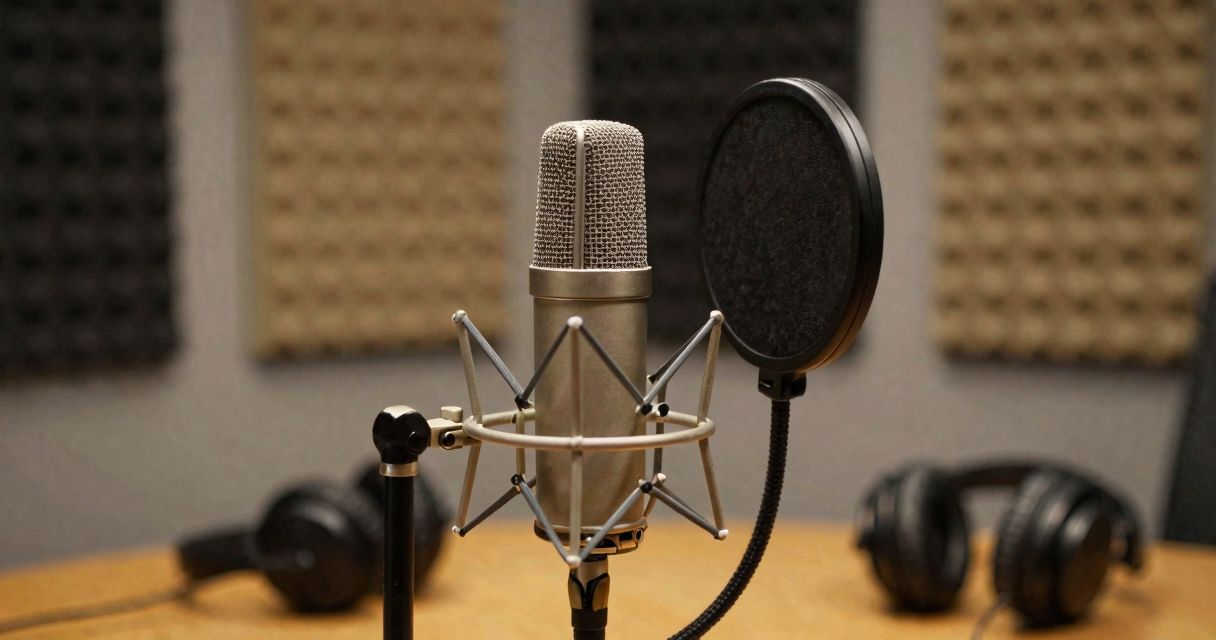
A deep timbre can elevate a podcast, give heft to narration, or carry a chorus. The choice of a microphone for a deep voice is no small matter: it conditions the texture, the proximity, and the readability of every word. After years spent between radio studios and sets, I have seen powerful voices fade away with a poor sensor… and others impose themselves from the first take with a tool designed for them. Here is a clear guide to choosing, comparing and dialing in without guessing.
Understanding the deep timbre and its capture challenges
Low voices concentrate a large part of energy between 80 and 200 Hz, with harmonics that structure intelligibility higher up in the spectrum. Baritone singers, narrators with a deep grain and certain contraltos share this challenge: preserving warmth without losing articulation. Foundational publications (JASA, J. Titze's work) place the typical male fundamental below 150 Hz, illustrating the demands placed on the microphone and preamp.
This generous range quickly tests the diaphragm and the input circuitry. A poorly suited sensor swells the low end, masks consonants and fatigues the listener. A well-chosen model preserves the body of the voice and lets it cut through the mix without forcing.
Why a dedicated mic changes the result from the first take
A useful curve, not just broad
On a low voice, the frequency response must be linear in the useful low end (50–150 Hz) and show a slight “presence” between 3 and 6 kHz for articulation. Too much bass: the result sounds dull. Not enough: the voice loses its signature. Look for a capsule that controls the proximity effect to avoid rumble when you get close.
The pickup pattern that protects your timbre
The cardioid pickup pattern isolates the source and limits room reflections, an asset for the lows that easily excite reverberation. The supercardioid and hypercardioid variants increase lateral rejection but require stricter positioning. In an imperfect booth, a tolerant cardioid is better than a too-tight pattern that bleeds at the slightest movement.
Sensitivity, saturation and background silence
Watch the SPL capability, the sensitivity, and the self-noise level. A projected deep voice generates a massive energy peak on plosives and can clip an input stage that is too lively. Conversely, a too-timid capsule/preamp combo forces you to push the gain, and the breath is audible immediately in the tails of sentences.
Dynamic, condenser or ribbon: which technology serves a deep voice best?
Broadcast dynamics dominate in narration and radio. Their thicker diaphragm smooths aggressive transients, supports plosives, and holds the proximity. Condensers, more detailed, flatter harmonics and brilliance, provided you master the room and apply a high-pass filter. Ribbon mics offer vintage smoothness, superb on a baritone, but require a powerful mic preamp and a quiet room.
- Dynamic mic: robust, forgiving with plosives, perfect for podcast, live and untreated home-studio setups.
- Large-diaphragm condenser: rich in detail, ideal in treated studios, requires control of the low end.
- Ribbon: silky, round, but sensitive to air movement and requires big headroom.
The purchase criteria that really count for a deep voice
- Useful bandwidth and low-end control: a firm curve below 120 Hz, with no muddy bump around 200 Hz.
- Measured presence: subtle clarity 3–5 kHz for diction, without sibilance.
- Proximity handling: capsule and grille designed to allow 8–12 cm proximity without overdoing it.
- Built-in filters: a switchable high-pass (low cut) saves you from resonant room modes.
- Pad: useful for very projecting voices or close-miked singing voice.
- Directivity: cardioid or supercardioid depending on the room and mic movement.
- Connectivity: XLR connection for the pro chain; USB for solo simplicity.
- Accessories: shock mount, windscreen, and especially a quality pop filter.
- Chain compatibility: check the audio interface and the preamp headroom.
Models known for flattering deep timbres
Without worshiping a brand, certain classics come back systematically when a solid, readable and controlled low end is needed. A quick overview by usage and temperament, based on real radio, voiceover, and singing sessions.
| Model (examples) | Technology | Character | Asset for deep voice | Ideal context |
|---|---|---|---|---|
| Shure SM7B / MV7 | Dynamic | Round, controlled, gentle presence | Controlled proximity, useful low-cut/high-mid decline | Podcast, voice over, pop/rock singing |
| Electro‑Voice RE20 / RE320 | Dynamic | Neutral, clean, little proximity effect | Firm bass, natural intelligibility | Radio, long-form narration, treated studio |
| RØDE Procaster / PodMic | Dynamic | Dense, energetic | Solid bass, good handling of plosives | Streaming, home-studio, mobile setup |
| Sennheiser MD421‑II | Dynamic | Clear, punchy | Low-cut switch, good articulation | Spoken/sung voice, multi-source recording |
| Audio‑Technica BP40 / AT2035 | Dyn. / Condenser | Wide bass / silky detail | Big texture without mud / breathable brightness | Voice over, studio singing, spoken word |
| Aston Stealth | Active dynamic | Versatile (voicings) | Dedicated voice profiles, good rejection | Pro podcast, hybrid studio |
| Heil PR 40 | Dynamic | Tight bass, open high end | Impact without veil, controlled presence | Broadcast, advertising voiceover |
| Neumann TLM 102 | Condenser | Warm, detailed | Highlights the deep-end harmonics | Treated studio, premium narration |
Need an overview before trying? See our updated selection in our voice mic comparison.
Settings and recording technique: what saves hours in post-production
Distance, angle and consistency
Place the mouth 10–15 cm from the capsule, very slightly angled (15–30°). This simple angle reduces plosives without losing warmth. Keep the same posture throughout the text: consistency prevents you from chasing volume in editing.
Clean and robust input chain
A broadcast dynamic mic often requires 55–60 dB of gain. Your microphone preamp must deliver them without noise. If not, an inline booster such as Cloudlifter/FetHead handles it. Check the audio interface: stable power, comfortable headroom and clean 24-bit converters.
Filters and light dynamics
- Enable a switchable high-pass (low cut) between 70 and 90 Hz to calm room rumble and footsteps.
- A soft compressor (ratio 2:1, attack 10–20 ms) tames the swings without crushing naturalness.
- The de-esser is set at the end of the chain if the 5–7 kHz presence becomes sibilant.
Common mistakes that stifle deep voices
- Close-miking without management: extreme proximity + lack of a pop filter = plosives and pumping.
- A resonant room: the bass excites room modes. A simple thick curtain behind the mic and a rug under the foot already make a difference.
- Excessive presence curve: a flattering solo “smile” EQ becomes tiresome on long listening.
- Too-low gain and post-normalization: the breath rises with everything else, unrecoverable.
Three concrete cases observed in the booth
Baritone for narrative podcast
Neutral dynamic mic, 12 cm distance, 20° angle. High-pass (low cut) at 80 Hz, light compression. Result: fullness preserved, consonants clear, quick editing.
Deep voiceover in an untreated office
Cardioid dynamic with good rejection. Acoustic screen behind the mic, thick windscreen. High-pass at 90 Hz, very light gate. The low end stays clean, ambient noise disappears from 20 cm off-axis.
Contralto in a treated studio
Large-diaphragm condenser, 70 Hz filter active, presence softened at 6 kHz by 1–2 dB. A hint of analog saturation adds grain without thickening the low end.
USB, XLR and workflow: which path to choose depending on the project?
A modern USB microphone simplifies setup and is suitable for solo deep voices if the internal converter is well designed. Evolving projects benefit from moving to XLR, to keep control of the chain and swap capsules as needed. On a tight budget, some streaming-oriented USB dynamics handle proximity well and include basic processing.
For an effective first setup without getting lost in settings, explore the accessible models tested on the ground in this Fifine mic dossier.
Prepare the room: the quiet ingredient that makes the low end resonate
A good acoustic treatment prevents your low register from bogging down. Target the initial reflections (side walls, ceiling above the microphone) with absorbent panels, and break up the standing waves in the corner of the room with thick elements. Even portable solutions — heavy curtains, filled shelves — transform the perception of the low end without heavy work.
Express check-list before buying
- Capsule type consistent with your recording space and your style.
- Measured curve: tight low end, gentle presence, no bump at 200 Hz.
- Accessories: shock mount, pop filter, and a stable arm capable of supporting the weight.
- Chain compatibility: headroom of the mic preamp, gain headroom, latency of the audio interface.
- Real voice test: read 60 seconds of text at your working distance and listen on studio headphones.
The sound operator's word
What I look for first with a deep voice: stability up close, articulation without sharp “sss” sibilance, and consistency between takes. When these three boxes are checked, everything becomes easier: less EQ, a compressor that does little work, and a controlled result on any listening system.
Ready to take the plunge? Define your environment, list your constraints, then choose a sensor that serves your grain rather than tames it. A good deep-voice mic doesn’t cheat: it frames, it refines, and it lets your sonic identity do the rest.