
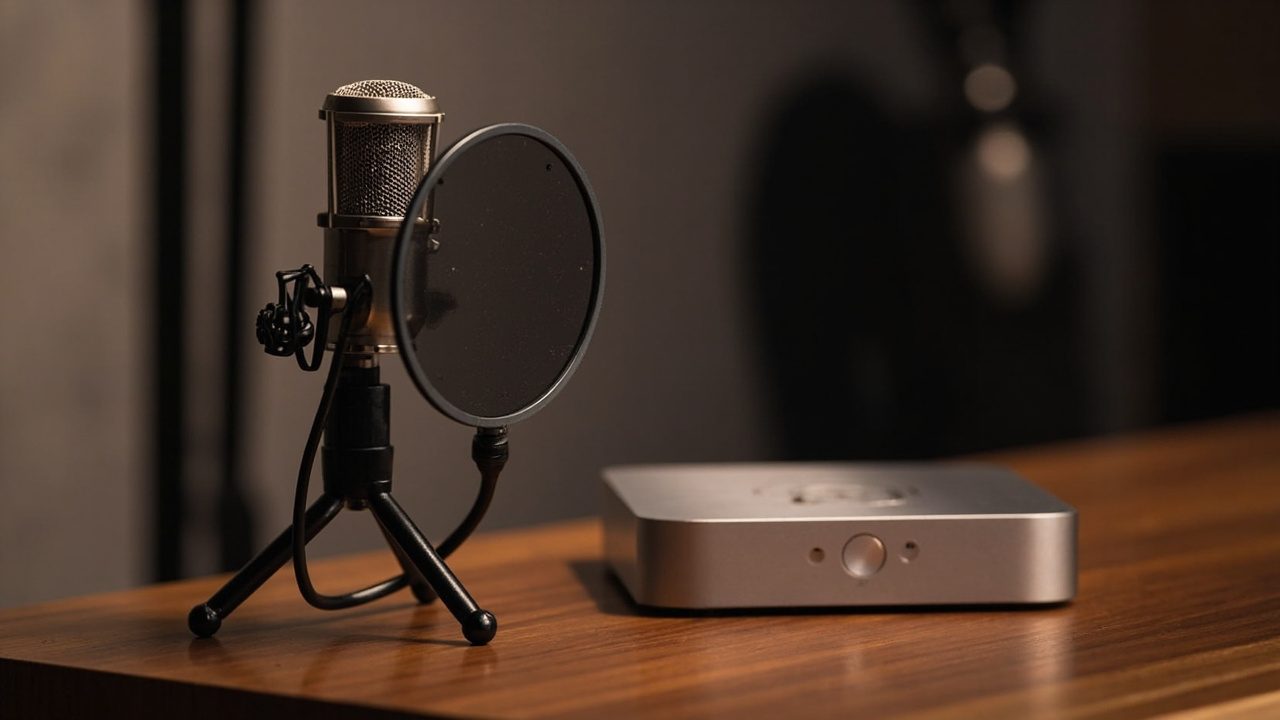
Are you looking for a vocal microphone amplifier capable of carrying your voice with elegance, without betraying your timbre or tiring the audience? This guide synthesizes what I observe on stages, in bars, in studios and on more ambitious setups. Objective: to help you choose a relevant vocal amplifier, easy to adjust, and suited to your musical reality — solo, acoustic duo, bands, rehearsals or nomadic performances.
What a vocal amp really needs to deliver
A faithful, clear and consistent sound
The priority isn’t the amount of bass, but readability. A well-projected voice is measured by its clarity, the naturalness of consonants, and a presence that stays gentle as you increase volume. Focus on the transparency of the preamps, the low distortion, and the extended yet controlled frequency response. A good vocal combo should stay stable when you push the gain and offer a comfortable headroom before saturation.
Connectors and microphone compatibility
Prefer XLR inputs over the mini-jack for a clean, lockable connection. If you use a condenser microphone, the amp should provide 48 V phantom power. Singers alternating dynamic and condenser mics will appreciate quiet preamp stages with enough gain available, to avoid raising the overall volume and triggering feedback.
Power, dispersion and feedback control
Power in watts doesn’t tell the whole story; look at headroom and room coverage. A good power reserve (headroom) keeps your voice clean at the peaks. Dedicated tweeters or coaxial systems improve articulation. An anti-feedback processor or at least a notch/parametric filter is a real plus in reverberant or tight rooms.
Selection criteria, from the field to purchase
Quality of the audio stages and processing
On stage, a direct and effective three-band equalizer helps tailor the tone to the acoustics. A low-cut filter around 80–120 Hz reduces handling noises and rumble. The built-in effects must be musical: a short reverb for intelligibility, a light compression to contain dynamic swings without choking the phrasing. Beyond features, listen to the grain: some amps flatter warmth, others lean toward surgical transparency.
Mobility, reliability, form factor
For itinerant sets, compactness and battery power are decisive. A rugged chassis, a solid metal grille, and truly ergonomic handles make the difference when you play several nights a week. Indoors, a more powerful but quiet model (discreet cooling) prevents listening fatigue during rehearsals.
Modern connectivity and mixing
Streaming instrumentals from a smartphone has become standard: a stable Bluetooth module makes life easier, but a wired auxiliary input remains essential. If you play as two or three, an integrated mixing desk with separate mic/instrument inputs, per-channel EQ and line-out for the front-of-house extends versatility. Monitor and recording outputs (line out/USB) are a plus for documenting your concerts.
What “type” of vocal amplifier depending on use?
People often lump acoustic combos, powered speakers and small portable PA systems together. They actually fulfill slightly different roles. The table below summarizes what I recommend most often.
| Usage | Recommended power | Dispersion | Useful features | Recommended format |
|---|---|---|---|---|
| Solo acoustic (bars, coffee-shops) | 40–80 W RMS | Wide angle, smooth highs | 3-band EQ, reverb, instrument input | Acoustic combo |
| Guitar/vocals duo, keyboard/vocals | 80–150 W RMS | Good projection, dedicated tweeter | 2–3 channels, anti-feedback, line output | Combo + small active speaker |
| Street/outdoor (small venues) | 50–100 W on battery | Front-focused, effective low-cut | Battery, Bluetooth, speaker stand | Portable PA |
| Stage club / small room | 150–300 W RMS | Projection and feedback control | Outputs for front-of-house and stage monitors | Powered speaker + mixer |
Real-life examples: configurations that prove effective
Acoustic duo, tile-covered and bright room
A singer and a guitarist play in a very reverberant restaurant. The acoustic combo with a gentle tweeter and a 100 Hz low-cut helps maintain intelligibility. The reverb remains discreet; we favor a bell-shaped EQ around 2.5 kHz for presence, and pull a bit of 300 Hz to thin out. A fine notch around 180–220 Hz blocks nascent feedback near the tile-covered bar.
Vocal and keyboard in a cafe-concert
Here, a 10” bi-amped powered speaker with two inputs provides more maneuvering room. The keyboard goes to the line, the voice to the second input. The line out sends the mix to the venue’s front-of-house if needed. The point: keep the same tonal color across quick balances from one date to another.
Street singing, autonomous power
An outdoor slam artist performs for two hours in a row. A portable battery-powered system with 50–80 W, a sturdy handle, and a speaker stand is the solution. The high end of the spectrum should be soft to avoid tiring passersby. Smartphone pairing is used for instrumentals, keeping levels moderate to preserve battery life.
Benchmark models to look at in 2026
Without touring the entire market, a few references often simplify life. The Boss Acoustic Singer (Live/Pro) offer nice bi-amplification, an effective anti-feedback and musical effects. The Roland Cube Street EX remains a safe bet for roaming. At Fender, the Acoustasonic 15 shines for its simplicity and its neutral tone at low volume. Behringer offers affordable active speakers with surprising power for small stages.
The VOX Mini Go 10 checks the boxes for rehearsals and street use thanks to its battery and light weight. For a scalable system, a good 8” or 10” active speaker paired with a small mixer will deliver more flexibility than a single all-in-one combo, especially if you add a second microphone or an instrument.
Quick settings for a clean voice
- Start by setting the gain with the loudest realistic voice; keep a peak LED that only lights up occasionally.
- Enable the low-cut if your voice handles it to reduce stage rumble and handling noises.
- Remove, before adding more: cut excess low-mids around 200–350 Hz to brighten the text.
- Add a short, discreet reverb such as “room” or “plate”; better to have too little than too much.
- Lightly compress the peaks to stabilize diction, avoiding pumping.
- Place the amp with a slight elevation and off-axis from the microphone to push back the feedback.
Budget: where to invest first?
Put the money in the microphone/preamp/HP section before gadgets. A good speaker and solid input stages do more for your voice than ten flashy effects. A quality built-in battery has a cost, but changes the game for nomadic artists. On the used market, favor well-maintained models, sold with receipt and tested at real volume. Reliability and after-sales service are often worth a few extra euros over new.
Microphone and amp: an inseparable duo
The final result also depends on the transducer. Choosing a mic suited to your timbre and environment is crucial. If you’re unsure between a sturdy dynamic and a more sensitive condenser, this guide will help you decide: dynamic microphone or condenser. To go further and fine-tune mic and amp, browse an updated panorama of vocal references: guide to buying vocal microphones.
Quick purchase checklist
- Connections: XLR inputs, phantom power, line/monitor outputs?
- Real power and headroom: is it enough for your usual venues?
- Dispersion: balanced coverage, well-treated tweeter, ventilation noise contained?
- Processing: useful EQ, low-cut, musical reverb, easy-to-set anti-feedback?
- Mobility: weight, battery, autonomy, speaker stand locations?
- Scalability: integrated mixer or possibility to add a small external mixer?
- Reliability: build, warranties, availability of after-sales service and parts.
Last benchmark before placing an order
A good vocal amplifier isn’t just powerful; it helps you sing better, hear yourself better, and save time during soundchecks. Take a moment to listen to your voice on two or three models, test the settings at concert volume, and picture yourself in your usual venues. The right choice becomes evident when the tool disappears behind the emotion you convey.