
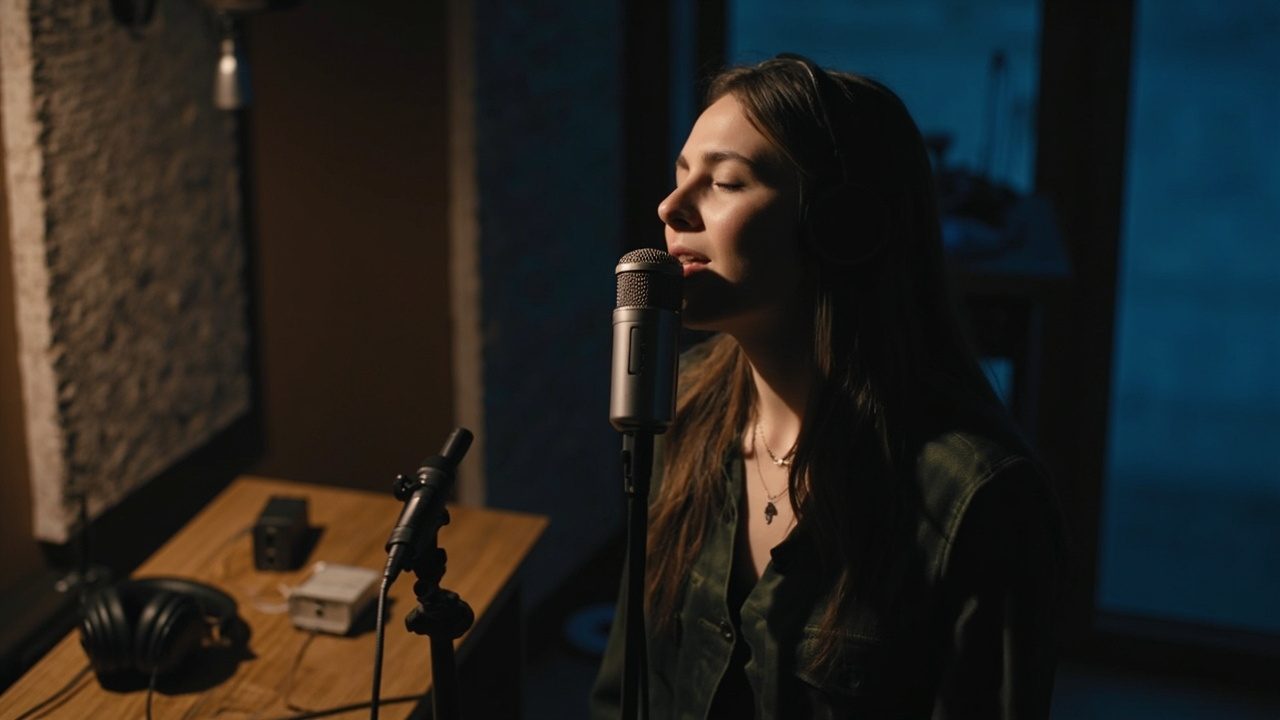
You are preparing a show, a rehearsal, or a karaoke night and you are looking for a wireless microphone for singing that sounds right, without locking you into cables. This 2026 guide brings together field experience and tests conducted in real conditions to illuminate the choice of Bluetooth microphones and near-wireless solutions, with a simple goal: to obtain a voice that is clear, stable, and pleasant to mix.
Wireless microphone for singing: what Bluetooth brings in 2026
Bluetooth has matured a lot in recent years. Models aimed at singing benefit from codec optimizations and greatly simplified ergonomics. Pairing is direct, connectivity with a smartphone or tablet is immediate, and use is ideal for light sessions, social videos or karaoke.
With the Bluetooth LE Audio, compression is more efficient, midrange rendering sounds more natural, and the energy in the highs remains usable for a pop voice. Karaoke and recording apps integrate better, making setup easier for non-techies.
What Bluetooth does well
- Total mobility for home karaoke, rehearsals and mobile content.
- Native smartphone ecosystem: no external receiver required on certain models.
- User-friendly interface: in-app equalizer, vocal presets and simple effects.
What Bluetooth does less well
For an amplified performance, the latency remains the point of vigilance: singing back with a perceptible delay can fatigue and disrupt the rhythm. Another limit: noisy radio environments can harm the link stability, and the real-world range shrinks as soon as there is an audience between you and the smartphone.
Bluetooth, 2.4 GHz or UHF: which technology for your use?
Before choosing a system, clarify your objective: capture a quick test setup, host an evening, or tackle a big stage. The three families complement each other more than they oppose.
| Technology | Typical latency | Useful range | Stage reliability | Complexity |
|---|---|---|---|---|
| 2.4 GHz band (proprietary dongle) | Low (a few ms) | Short to medium | Good on small/medium stages | Plug and play |
| Digital UHF | Very low | High | Benchmark for touring | Scan, frequencies, rack |
| Bluetooth / LE Audio | Medium (depends on app) | Short | More mobile/street studio | Ultra simple |
If you’re still torn between wired and wireless, this guide clearly explains the trade-offs: wired or wireless: which is the best choice?
How we select our wireless mics for 2026
- Voice in the foreground: intelligibility, grain, controlled sibilance.
- Autonomy and power management: a full session without unexpected recharge.
- Radio reliability: resistance to interference and signal consistency.
- On-stage ergonomics: ease of handling, buttons, readability.
- Compatibility: inputs/outputs, apps, presence of a USB-C receiver when needed.
Each model was evaluated in rehearsal with on-stage monitoring, at a crowded show floor, and in a treated room, to compare results to real conditions.
Top 5 Bluetooth microphones 2026 for singing at home and on the go
BONAOK Karaoke BT — instant pleasure
A domestic sector classic. All-in-one microphone with built-in speaker, effects features, and easy sync with a smartphone. The result puts the voice at the center, bright enough for pop standards. Best for parties, warm-ups, and vocal games.
- Pros: simplicity, playful effects, affordable price.
- Cons: reverb to dial in, no real stage, latency perceived on return.
SabineTek SmartMike+ — mobile and social networks
Small clip-on mic that connects via Bluetooth to the phone. In tandem, one mic serves as a receiver and greatly reduces latency, practical for singing in front of the camera. The sound is clean on spoken voice; for singing, the in-app equalization helps shape the timbre.
- Pros: ultra-compact, smartphone workflow, very flexible 2-mic kit.
- Cons: best at close range, breath control to be refined.
Sennheiser Memory Mic — capture and synchronization
Feature: it records internally and re-synchronizes with the video afterward. No risk of radio dropouts during filming. Ideal for rehearsing a song and reviewing performance with consistent sound, without cables. Not intended for amplified live performance.
- Pros: zero drop-outs, stable quality, reliable post-sync.
- Cons: no real-time monitoring, editing-oriented workflow.
Shure MoveMic Two — demanding creators
Two-lavalier mic pair designed for smartphones and cameras, aimed at clean voices on the move. App tracking allows fine-tuning the equalization and monitoring levels. In acoustic singing or piano-vocal duo in an apartment, the result is clear and musical.
- Pros: Shure signature, dedicated app, solid hardware.
- Cons: lavalier format, requires good placement technique.
Bietrun Karaoke BT — budget alternative for the party
Bluetooth leisure mic designed for easy fun: clear voice, basic effects, decent battery life. It’s appreciated for its longevity and ease of sharing among guests. For rehearsing a verse, it’s sufficient as long as the volume stays moderate.
- Pros: affordable, ruggedness, simplicity.
- Cons: noticeable vocal processing, limited dynamic range.
Beyond Bluetooth: two tougher options for the stage
If the goal is a true live performance with monitors and front-of-house, it’s best to switch to a radio system designed for live use.
- 2.4 GHz kit with a dongle for a portable speaker (e.g., systems compatible with PartyBox): very low latency, plug and play, ideal for bars and small stages.
- Digital UHF systems for professional series: higher range, frequency scanning, radio robustness at festivals. Add a diversity system to secure the link.
To deepen the capture logic depending on capsule type and environment, our post on the microphone directivity remains an excellent compass.
Settings that change everything: quick engineering tips
Placement and vocal technique
Keep 3 to 5 cm of distance and a slight angle to minimize plosives. A cardioid capsule leaves little room for deviations: center the mouth, manage your dynamics with your wrist to avoid saturating the preamps of mobile devices.
Managing the monitor return and the room
On a portable speaker, cut the aggressive highs and dig into around 250–350 Hz if the room rings. Don’t overdo the built-in reverb: clarity comes first. If the system offers a high-pass filter, engage it to reduce handling noise.
Radio and power
Check the range at the exact spot where you will sing; reconnaissance avoids surprises. Anticipate the battery life: start with 100% charge and carry an external battery for the smartphone. Keep the mobile away from Wi‑Fi routers and from the audience to limit interference.
Common mistakes we see live
- Relying on Bluetooth for real-time on-stage monitoring: latency disrupts the rhythm setup.
- Forgetting a full walk-test: rehearsing movements and peak lyrics at real volume.
- Ignoring acoustics: a bright room requires a gentler EQ in the highs, and a firmer high-pass.
- Neglecting input level management: avoid clipping preamps, leave 6–10 dB of headroom.
Real-world microphone scenarios
Apartment Rehearsal
A Bluetooth mic such as BONAOK with a light in-app equalization is enough to work on intonation and lyrics. To record a clean mock-up, a moving lavalier mic (MoveMic/SmartMike+) placed at 12–15 cm yields a natural timbre.
Bar show with portable speaker
Prefer a 2.4 GHz set with a dongle, which reduces latency and secures the link. Place the receiver in direct line of sight of the mic, elevated. A high-pass filter and a light compressor will keep the voice upfront without feedback.
Small community stage
Opt for digital UHF with automatic scanning: better range and fewer hiccups. Set up a diversity system to limit field dropouts and keep a spare frequency ready.
Our 2026 wireless mics favorites
- Shure MoveMic Two: the most coherent mobile solution for creators and vocal coaches, with clear voices and a reliable app.
- 2.4 GHz kit for a portable speaker: unbeatable efficiency-to-price ratio for a small stage or garden party where you want to sing without delay.
- Sennheiser Memory Mic: a formidable tool for documenting vocal progression without fighting with the radio, then editing cleanly.
Quick checklist before turning up the volume
- Fully charge the microphone and the phone; spare cable at hand.
- Test link stability along your entire stage path.
- Adjust equalization: active high-pass, controlled sibilance.
- Levels set with 6 dB of headroom; use an optical limiter or gentle compressor if available.
The right tool depends on your context. For singing and having fun at home or creating content, Bluetooth has reached a sufficient, comfortable, and practical level. For a front that hits hard and precise feedback, switch to 2.4 GHz or UHF with scanning; you’ll gain reliability and impact. If you want to go further in building your vocal chain or compare other microphone families, check out our resources and guides on the site, including the wired vs wireless comparison and the directivity dossier. Take time to listen, adjust, and record: technique is forgotten when the song breathes.