
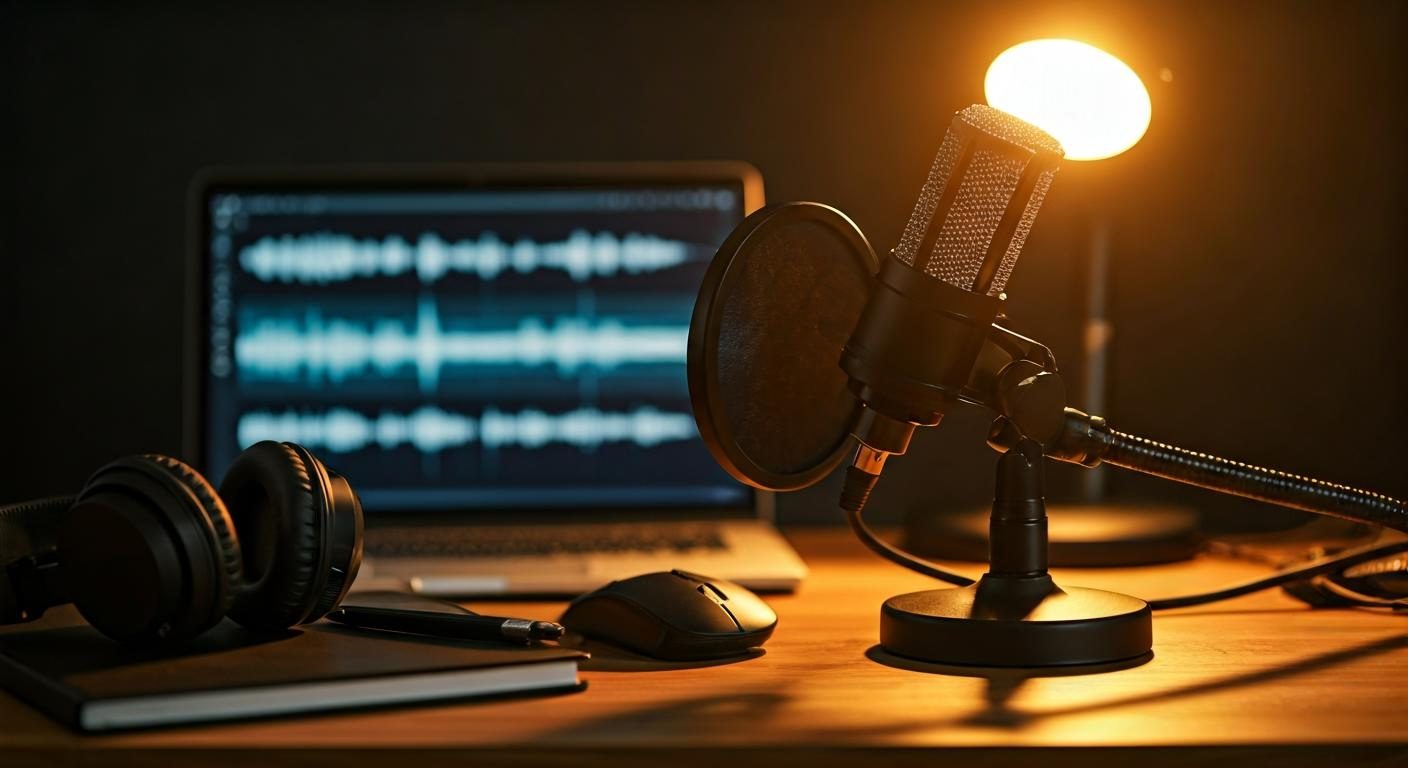
We put it on the desk, plugged in in a few seconds, and the first take was enough to understand why the Rode NT-USB remains a safe bet. This USB microphone concentrates a clean sound, simple controls, and a real ability to magnify spoken voice. The objective of this test is clear: to show you what it can do, what it does less well, and who it is aimed at in 2026.
Why the NT‑USB wins you over as soon as you pick it up
Rode ships a complete and coherent kit. In the box: desk stand, mounting ring, long cable, pouch and a rigid pop filter perfectly fitted. No need to buy accessories to get started, which makes life easier for creators who want to record right away.
The metal chassis inspires confidence. The knobs are solid, the matte finish resists fingerprints. You position it, plug it in, adjust the headphone volume and the direct mix, then you record. Plug-and-play simplicity remains its best daily asset.
Sound specs and connectivity: the essentials for successful takes
The NT‑USB is a USB microphone with a condenser capsule, a cardioid pickup pattern and a 16‑bit/48 kHz converter. The result aims for a clear and detailed render, tailored for speech, close‑up singing, and close‑miked acoustic instruments.
There is a 3.5 mm headphone output with latency-free monitoring and a blend knob to balance mic return vs computer audio. It’s the setting that changes a session: you hear yourself naturally, without lag, you place the voice with precision.
The tighter directivity properly isolates the main source and limits side noises. For the curious, a useful reminder on the families of directivities is detailed here: Guide to polar patterns.
Field test: narration, light singing and guitar
On our test bench, the spoken voice immediately gains presence. The image is clear, with controlled bass and intelligible midrange. At 15–20 cm, the mic offers a light proximity effect, flattering for podcasts and voice-overs.
In singing, we prefer to keep the pop filter and stay vigilant about plosives. The explosive consonants are well controlled, without muffling the upper end of the spectrum. The folk guitar in close-miking comes out clean, with readable transients, provided you manage placement.
The direct monitor mix to the headset helps manage nuances in real time. You can push a few dB of vocal return to control the attack and distance, especially during one-take recordings.
Tone and noise: our concrete observations
The signature is fairly clean, with a slightly boosted upper mid for diction. This is what gives that sense of clarity without forcing it. A light equalization is enough to adapt the sound to your voice depending on the context.
As for room ambience, handling the background noise will depend on the environment. The NT‑USB doesn’t work miracles in a reverberant room, but its capsule remains measured on off-axis sounds. Turning off a noisy fan makes a real difference.
Sibilants are tamed by placement and a discreet de-esser. The same for the lows: a gentle low-cut frees space in the bottom of the spectrum and limits mechanical transmissions from the desk.
Streaming, meetings and gaming: comfort and consistency
In streaming, stability comes first. The control of the return/computer mix avoids software back-and-forth and ensures controlled listening. Listeners perceive a denser voice and less "webcam" sounding from the first minute.
For online gaming, frontal isolation reduces keyboard side noises. Keys remain audible if the mic is too close, but cross-talk drops off sharply off-axis. Keeping the mic on-axis with the mouth, slightly offset, remains the best remedy.
In video calls, you gain instant credibility. The settled timbre carries the speech well, without having to raise your voice. In long meetings, listening fatigue drops significantly.
Mobile devices and tablets: plug-and-play connections
On recent iPads and iPhones, a simple connection via official adapter and sufficient power is enough. USB‑C devices make it easy: you plug in and it works. The important thing is to keep a healthy level margin and monitor the headphone return.
On laptops, no third‑party drivers are required. Creative software (DAWs, OBS, editing software) recognize the NT‑USB's input and headphone output. Monitoring comfort becomes a reflex once you start using it.
A small practical note: a powered hub can handle demanding tablets. Tested with GarageBand, Audacity and OBS, compatibility was as expected.
NT‑USB vs NT‑USB+ : which to choose in 2026?
Rode offers a modernized version, the NT‑USB+. It preserves the philosophy of the historical model, with several technically relevant additions for today’s workflows.
| Feature | NT‑USB | NT‑USB+ |
|---|---|---|
| Conversion | 16‑bit/48 kHz | 24‑bit/48 kHz |
| Connection | USB‑A via cable | USB‑C native |
| Integrated processing | — | APHEX processing via DSP (compressor, exciter, gate) |
| Software | Generic compatibility | Rode Connect and Studio (control of effects) |
| Recommended use | Podcast, voice, simple streaming | Demanding creators, multi-track, effects from the start |
No Bluetooth or XLR on these two models. The NT‑USB+ stands out with its internal DSP, its modernized preamps, and more advanced software integration. If you stream often or mix multiple sources, the newer version simplifies the chain.
Quick comparisons with USB rivals
Compared to the Blue Yeti, the NT‑USB relies on a single cardioid pickup pattern, but offers more natural intelligibility for spoken voice and simpler monitoring. The Yeti remains versatile thanks to its multiple modes, at the cost of more sensitive placement.
Against the HyperX QuadCast, the Rode sounds more neutral and mature where the HyperX pushes a more “broadcast” signature. For a detailed review of this very popular competitor, see our test of the HyperX QuadCast.
In any case, the NT‑USB bets on sobriety and consistency. It doesn't seek a spectacular effect, but a solid base that's easy to work with in post-production.
Placement tips and settings for a pro result
Rule number one: master the capture distance. Between 15 and 20 cm, slightly off-axis from the mouth, you gain definition while controlling plosives. The included filter is effective; keep it in place for the voice.
- Stand: an articulating arm reduces keyboard noise and desk vibrations.
- Room: treating early reflections (curtains, carpets, bookshelves) makes all the difference.
- EQ: gentle low-cut at 75–90 Hz, small bell cut of −2 dB around 4–6 kHz if the voice whistles.
- Dynamics: light compression 2:1, fast attack, short release for speech.
- Level: target a peak between −12 and −9 dBFS, without clipping the gain control.
For creators who stack sources and scenes, the NT‑USB+ and its Rode Connect simplify routings and stacking effects without overburdening the computer.
What you need to know about capture and the room
A cardioid mic remains sensitive to acoustics. If the room resonates, the voice will sound distant even with a good take. A rug, a panel behind the computer, and the difference is felt from the first replay.
The perceived signal-to-noise ratio depends as much on your input level as on the quiet of the room. Raise the level as close to the source as possible, reduce unnecessary system volumes, and move the mic away from surfaces that bounce the wave directly toward the capsule.
To dive into the principles of polarity and isolation, this guide remains a useful resource: Directivity Explained.
Limits to keep in mind
USB only, no XLR output. If you need to plug into an analog preamp, this is not the right tool. The desk stand transmits desk shocks if you type hard. A suspended mount fixes this.
The original NT‑USB’s 16 bits are sufficient for most web uses. Post-production or sound design perfectionists will prefer the 24‑bit depth of the NT‑USB+ for more headroom in editing.
No gadget features here. The Rode approach remains classic, with solid acoustic quality and reliable controls rather than flashy effects.
Verdict: a solid base for today’s voices
The Rode NT-USB establishes itself as a very credible “starter pro.” Quick installation, readable output, smooth workflow, and well-thought accessories. Podcasters, streamers and trainers will immediately gain clarity without getting bogged down in a complex setup.
Looking for more built-in tools and a bigger processing margin? The NT‑USB+ and its APHEX processing in DSP and its USB‑C connection will last longer in a modern chain.
To choose your microphone confidently according to your use and your room, browse our tests and comparisons on L’Atelier du Microphone, with a helpful detour through the notions of directivity and capture. You’ll walk away with a coherent setup and a sound ready to publish.