
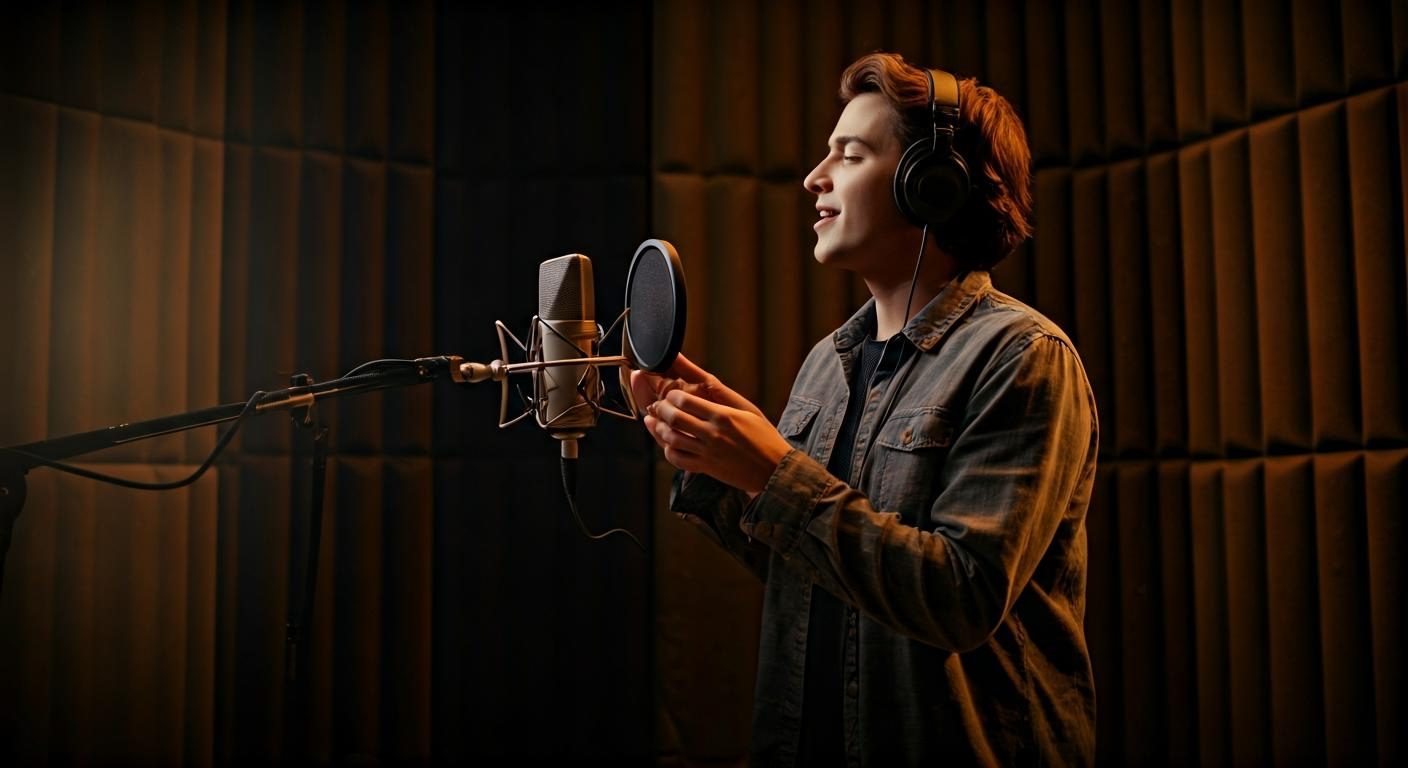
Learning to sing is a personalized journey: the time required varies according to your goals, your diligence, and your context. This article offers realistic benchmarks, clear steps, and practical tips to progress effectively without getting discouraged.
Understanding the time required to learn to sing
The path to learning to sing evolves strongly depending on the objective: basic, intermediate or stage/performance. For some, a few months are enough to lay the foundations: breathing, placement, and pitch accuracy. This estimate serves as a compass rather than a limit. The idea is to establish a trajectory adapted to your physiology, your schedule, and your motivation, without trying to go too fast.
As a rule, breathing, placement, and pitch accuracy strengthen over a few months, then broaden with more targeted training. The time spent each week and the quality of feedback you receive play a decisive role. A progressive approach helps avoid tension and bad habits from the start, while giving you concrete evidence of your progress.
The typical milestones of vocal progression
The steps are drawn around four axes: foundation and fundamentals, development of technique and breath, mastery of registers and interpretation, and progression toward performance and personal style. Each milestone offers measurable objectives and micro-rewards that sustain constant motivation throughout the journey.
As progress continues, interpretation develops and repertoire widens. This dual approach transforms abstract technique into tangible expression and reveals your personal color. The work relies on choices of pieces that highlight your strengths while posing manageable challenges. The evolution is not linear: it requires regular adjustments and objective feedback to stay aligned with your goals.
From zero to finding your voice in a few months
First months: discovering your voice, learning breath and posture, performing vocal warm-ups and simple pieces. The practical objective is clear: establish a discipline that lasts over time and encourage listening to your own voice. We prioritize concrete and measurable goals to feel progress, such as maintaining controlled breathing over a phrase and singing a simple melody with clear articulation.
Practical objectives: establish a regular routine, sing with precision, and listen to your voice. Recommended frequency: several sessions per week (for example 3–5 ×/week) and 20–40 minutes per session. This phase may seem slow, but it builds the foundations without vocal overstrain. Timely objective feedback makes all the difference to correct nascent habits and avoid tensions.
1 to 2 years: strengthening technique and repertoire
Several months in this range involve a more refined approach to technique: articulation, pitch accuracy on varied intervals, management of transitions between registers and breath connections. This step broadens the vocal vocabulary and increases confidence on stage. Rhythmic anchors, nuances and textures are gradually introduced to give depth to the singing.
The repertoire expands and interpretation takes shape: we choose pieces that require musicality and personal expression, while remaining coherent with the abilities acquired. Regular feedback, via self-recording or a coach, is essential to validate technical and artistic choices and adjust the training program in light of a life that can be busy. Structured training, about 3–4 times per week, remains the foundation of lasting progress.
More than 3 years: mastery and personal expression
Beyond three years, the objective shifts toward widening the register and refining vocal identity. We nurture expression and interpretation, explore varied genres, and push the technical boundaries without losing internal coherence. This phase requires regular sessions and opportunities for performance that strengthen the living connection with the audience. The work becomes a personal journey where each piece embodies your musical individuality.
Setting clear artistic objectives and multiplying opportunities to perform helps channel energy and maintain momentum. The alliance between technical discipline and expressive freedom becomes the signature of your voice. Potential coaching or mentoring can provide valuable insight into repertoire choice and interpretation nuances, in order to avoid habits that hinder progression.
Routines and tools to progress faster
Establishing an effective routine is the best lever for progressing without exhausting yourself. Regular and short but substantive sessions, combined with vocal warm-ups and targeted vocal exercises, create a safe and reproducible framework. Recording your attempts, followed by self-feedback, allows quickly adjusting errors without relying solely on external feedback. Work on repertoire and interpretation should also be integrated to solidify memorization and stage presence.
A suitable practice space and properly chosen equipment play a key role: controlled acoustics, compatible microphone and interface, and an environment conducive to concentration. If possible, benefit from guidance or feedback from a teacher to avoid bad habits and accelerate the assimilation of techniques. To optimize the whole, vary the trainings and schedule sessions in a logical progression rather than accumulating isolated movements.
To refine your technical arsenal and record your attempts, visit the site Latelier du Microphone which offers equipment and acoustics advice adapted to the voice. The choice of suitable equipment is not insignificant: a well-thought-out setup makes listening more faithful and facilitates self-correction.
Practical estimates according to your goals (evolution table)
To help you plan the journey and set realistic expectations, here is a concise table of indicative durations and key activities by level. The table follows a progressive logic and takes into account individual variations. Use it as a living guide and adjust it according to your feelings and availability.
| Goal | Indicative duration | Key activities | Tips |
|---|---|---|---|
| Basic | 3–6 months | Breathing, placement, simple vocalizations, first pieces | Consistency and listening to the voice; prioritize vocal safety |
| Intermediate | 1–2 years | Pitch accuracy on varied intervals, transitions between registers, growing repertoire | Regular feedback (self-recording or coach), structured training |
| Advanced | 2–3 years and more | Expression, complex interpretation, diversity of genres | Clear artistic goals, potential public performances |
To complete these benchmarks, consult Latelier du Microphone and discover advice on choosing and using recording equipment. Progress becomes clearer when the equipment accompanies you in the long term, without complicating your vocal work.
Continue singing with consistency and enjoyment to reveal your voice is the heart of the journey. Regularity, perspective, and the pleasure of the process are the engines that allow you to achieve an authentic voice and gain confidence on stage and in daily life.